
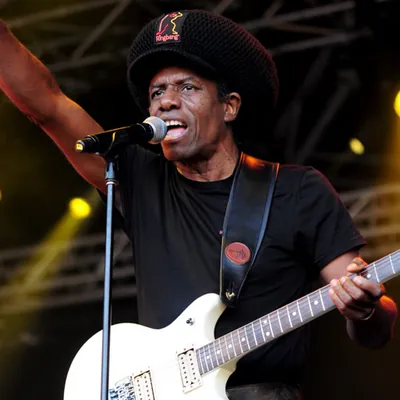
Photo: Eddy_Grant_at_Supreme_Court_Gardens.jpg: Stuart Sevastos derivative work: Austin512 (talk), CC BY 2.0, via Wikimedia Commons.
Eddy Grant was born in what is now Guyana and moved to London as a boy, and he carried both places in his music for the rest of his career. He first made his name fronting the Equals, whose "Baby, Come Back" topped the UK chart in 1968, then built a solo career blending reggae, pop, and Caribbean rhythms into a style he called ringbang. His biggest solo moment came in the early 1980s with "I Don't Wanna Dance" and "Electric Avenue," a pair of hits that took his sound around the world.
Start here
Killer on the Rampage (1982). His commercial peak, and the clearest picture of what he does well. "I Don't Wanna Dance" and "Electric Avenue" are both here, the latter a sharp, synth-driven protest song about the 1981 Brixton riot.
Biography
Edmond Montague Grant (born 5 March 1948) is a Guyanese-born British singer, songwriter, multi-instrumentalist, and record producer. Noted for his genre-blending style and socially conscious lyrics, he is the creator of the musical genre known as ringbang.
Grant rose to prominence as a founding member of the Equals, one of the UK's first racially mixed bands who are best remembered for the hit song "Baby, Come Back" (1967), which Grant wrote and performed lead guitar and backing vocals on. His subsequent solo career spawned songs such as "I Don't Wanna Dance" (1982), "Electric Avenue" (1983), and the anti-apartheid anthem "Gimme Hope Jo'anna" (1988). "Electric Avenue" reached platinum status, became his biggest international hit, and earned a Grammy Award nomination.
From Wikipedia, licensed under CC BY-SA. Read the full article.
Studio albums
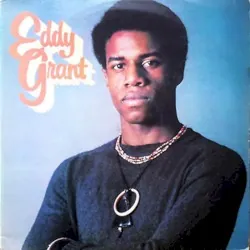 Eddy Grant 1975
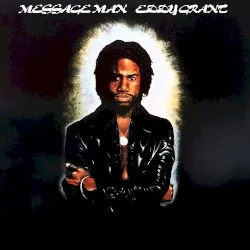 Message Man 1977
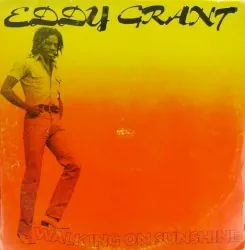 Walking on Sunshine 1978Love in Exile 1980
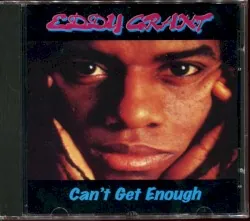 Can’t Get Enough 1981
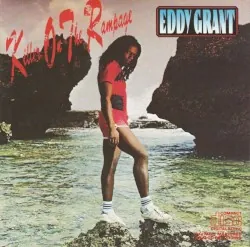 Killer on the Rampage 1982
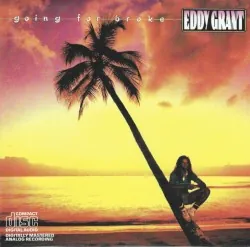 Going for Broke 1984
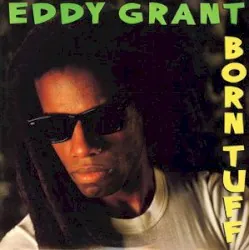 Born Tuff 1986
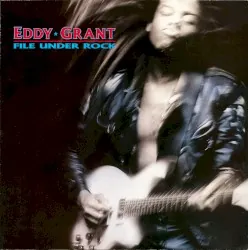 File Under Rock 1988
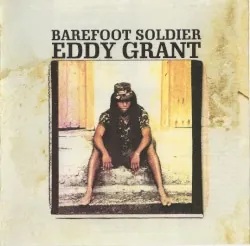 Barefoot Soldier 1990
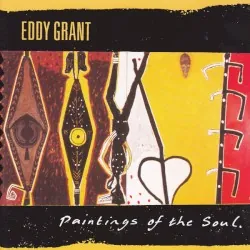 Paintings of the Soul 1992
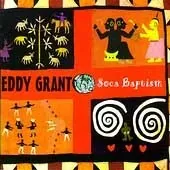 Soca Baptism 1993
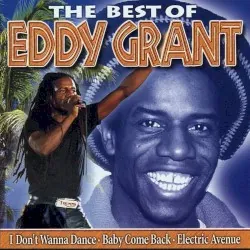 The Best of Eddy Grant 2001Hearts and Diamonds 2001
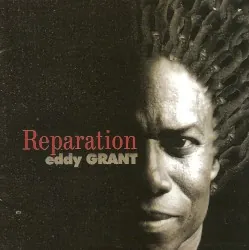 Reparation 2005This Is Eddy Grant 2013
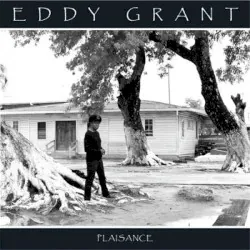 Plaisance 2017
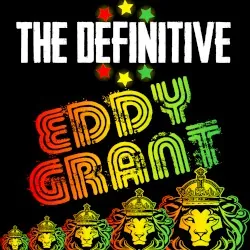 The Definitive Eddy Grant 2025
Discography
Official studio albums and EPs.
- 2025The Definitive Eddy GrantAlbum
- 2022Baby ComeEP
- 2017PlaisanceAlbum
- 2013This Is Eddy GrantAlbum
- 2005ReparationAlbum
- 2001Hearts and DiamondsAlbum
- 2001The Best of Eddy GrantAlbum
- 1993Soca BaptismAlbum
- 1992Paintings of the SoulAlbum
- 1990Barefoot SoldierAlbum
- 1988File Under RockAlbum
- 1986Born TuffAlbum
- 1984Going for BrokeAlbum
- 1982Killer on the RampageAlbum
- 1981Can’t Get EnoughAlbum
- 1980Love in ExileAlbum
- 1978Walking on SunshineAlbum
- 1978Say I Love YouEP
- 1977Message ManAlbum
- 1975Eddy GrantAlbum
Latest news
No news stories yet.