
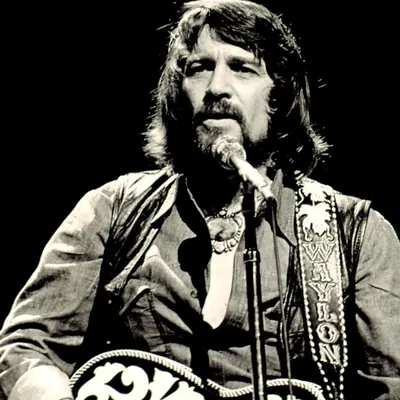
Photo: RCA Records, Public domain, via Wikimedia Commons.
Waylon Jennings
Waylon Jennings came out of Littlefield, Texas, and got his start playing bass for Buddy Holly — he was on the 1959 tour and gave up his seat on the plane that crashed, a story he carried for the rest of his life. Over the next decade he chafed against the Nashville way of making records, and by the early 1970s he'd won control of his own sound: tougher, looser, and built around his band. Alongside Willie Nelson he became the face of what got called outlaw country, with songs like "Good Hearted Woman," "Luckenbach, Texas," and "Mammas Don't Let Your Babies Grow Up to Be Cowboys."
Start here
Honky Tonk Heroes (1973). This is where his outlaw sound fully arrived: most of the songs came from Billy Joe Shaver, and Waylon's band played them raw and direct instead of polished, including "You Asked Me To" and the title track.
Biography
Waylon Arnold Jennings (born Wayland Arnold Jennings, June 15, 1937 – February 13, 2002) was an American country music singer, songwriter, musician, actor, and author. He is considered one of the pioneers of the outlaw movement in country music.
Jennings started playing guitar at age eight and performed at 14 on KVOW radio, after which he formed his first band, the Texas Longhorns. Jennings left high school at age 16, determined to become a musician, and worked as a performer and DJ on KVOW, KDAV, KYTI, KLLL, in Coolidge, Arizona, and Phoenix. In 1958, Buddy Holly arranged Jennings's first recording session, a cover of "Jole Blon", and hired him to play bass. Jennings gave up his seat on the ill-fated airplane flight in 1959 that crashed and killed Holly, J. P. "the Big Bopper" Richardson and Ritchie Valens.
Jennings then returned to Texas, taking several years off from music before eventually moving to Arizona and forming a rockabilly club band, the Waylors, which became the house band at JD's, a club in Tempe, Arizona. He recorded for independent label Trend Records and A&M Records, but did not achieve success until moving to RCA Victor in 1965.
From Wikipedia, licensed under CC BY-SA. Read the full article.
Studio albums
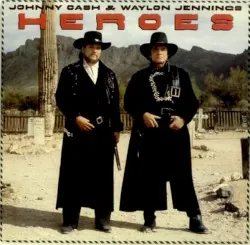 Heroes 1986Sweet Mother Texas 1986Hangin’ Tough 1987A Man Called Hoss 1987Full Circle 1988The Eagle 1990Ol’ Waylon Sings Ol’ Hank 1992Too Dumb for New York City, Too Ugly for L.A. 1992Cowboys, Sisters, Rascals and Dirt 1993Waymore’s Blues (Part II) 1994Right for the Time 1996Closing In on the Fire 1998
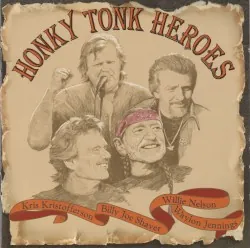 Honky Tonk Heroes 2000Waylon Forever 2008Goin’ Down Rockin’: The Last Recordings 2012Fenixon 2014The Lost Nashville Sessions 2016Songbird 2025
Discography
Official studio albums and EPs.
- 2025SongbirdAlbum
- 2016The Lost Nashville SessionsAlbum
- 2014FenixonAlbum
- 2013Old 97's & Waylon JenningsEP
- 2012Goin’ Down Rockin’: The Last RecordingsAlbum
- 2008Waylon ForeverAlbum
- 2000Honky Tonk HeroesAlbum
- 1998Closing In on the FireAlbum
- 1996Right for the TimeAlbum
- 1994Waymore’s Blues (Part II)Album
- 1993Cowboys, Sisters, Rascals and DirtAlbum
- 1992Too Dumb for New York City, Too Ugly for L.A.Album
- 1992Ol’ Waylon Sings Ol’ HankAlbum
- 1990The EagleAlbum
- 1988Full CircleAlbum
- 1987A Man Called HossAlbum
- 1987Hangin’ ToughAlbum
- 1986Sweet Mother TexasAlbum
- 1986Will the Wolf SurviveAlbum
- 1986HeroesAlbum
- 1985Turn the PageAlbum
- 1984Never Could Toe the MarkAlbum
- 1983It’s Only Rock & RollAlbum
- 1983Waylon and CompanyAlbum
- 1982Black on BlackAlbum
- 1981Leather and LaceAlbum
- 1980Music ManAlbum
- 1979What Goes Around Comes AroundAlbum
- 1978I’ve Always Been CrazyAlbum
- 1977Ol’ WaylonAlbum
- 1976Are You Ready for the CountryAlbum
- 1975Dreaming My DreamsAlbum
- 1974The Ramblin’ ManAlbum
- 1974This TimeAlbum
- 1973Honky Tonk HeroesAlbum
- 1973Lonesome, On’ry and MeanAlbum
- 1972Ladies Love OutlawsAlbum
- 1972Good Hearted WomanAlbum
- 1971Cedartown, GeorgiaAlbum
- 1971The Taker / TulsaAlbum
- 1970Singer of Sad SongsAlbum
- 1970Don’t Think TwiceAlbum
- 1970WaylonAlbum
- 1969Country-FolkAlbum
- 1969Just to Satisfy YouAlbum
- 1968JewelsAlbum
- 1968Only the GreatestAlbum
- 1968Hangin’ OnAlbum
- 1967The One and OnlyAlbum
- 1967Love of the Common PeopleAlbum
- 1967Waylon Sings Ol’ HarlanAlbum
- 1966Leavin’ TownAlbum
- 1966Folk-CountryAlbum
- 1964JD’sAlbum
Latest news
No news stories yet.